Macky’s Study Jam Eases Midterm Pressure with Peer-Powered Sessions
Short Activity Report
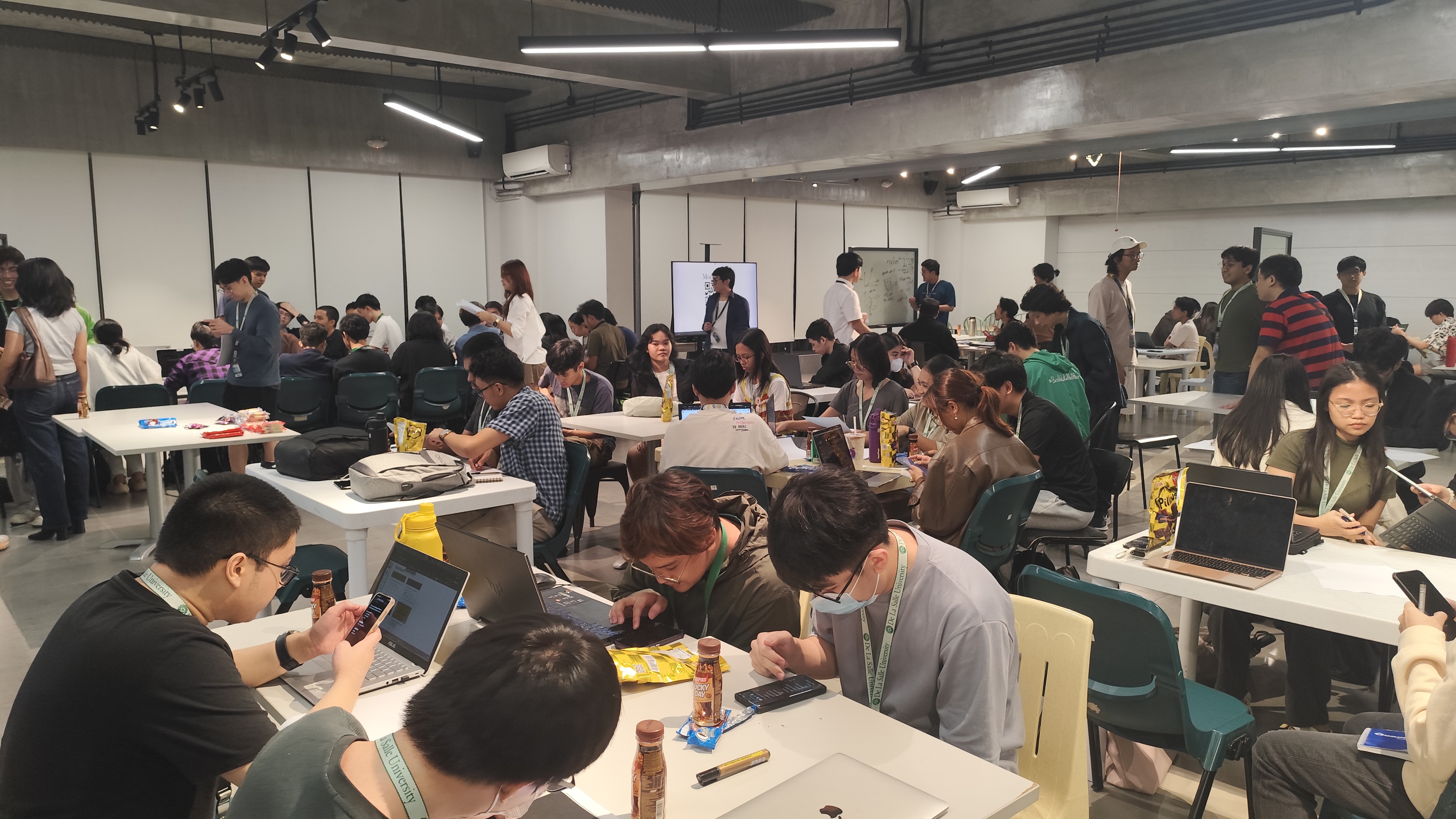
As midterms week loomed, College of Computer Studies (CCS) students packed into venues G104–G105 for Macky’s Study Jam, an evening of in-depth peer-led reviews designed to turn students’ exam uncertainty into aces.
On October 10, 2025, the partnered event between the La Salle Computer Society (LSCS) and the Peer Tutor Society (PTS) provided a crucial academic helping hand. From 5:00 PM to 8:00 PM, students engaged in targeted mock exams and reviews for core CCS courses such as CCPROG1, CCINFOM, CCDSALG, and MTH101A. The initiative was built on the idea that group study fosters deeper understanding, allowing participants to collaborate in parallel sessions and fill gaps in their knowledge.
For Adler Strebel, Vice President for Human Resources Development of LSCS, the event's success was visible in the students' active participation. “The moment participants ask questions, it’s a sign that we are thinking,” Adler noted. “It shows they were really engaged and curious.” This direct communication with tutors who may have already taken the subjects prior to the session was a key benefit, offering not just review but also practical exam strategies. While a criteria of success, the high attendance of students also presented logistical challenges. “Handling the number of participants and the venue itself were obstacles,” Strebel admitted. The strategy to manage this involved dividing tutors by their specialty and allowing students the freedom to choose their review focus and sit with peers they were comfortable with — creating an organic and effective learning environment.
In the long run, Macky’s Study Jam is planned as a recurring event, depending on the circumstances of upcoming terms. The project heads are considering new strategies to further enhance engagement, such as refining seating arrangements to better facilitate interaction. According to Adler, students may feel less reserved when they interact in smaller tutor groups. The event proved that peer-to-peer support is a vital tool for tackling academic pressures — creating an open community of learners in sync with their goal of excellence.